
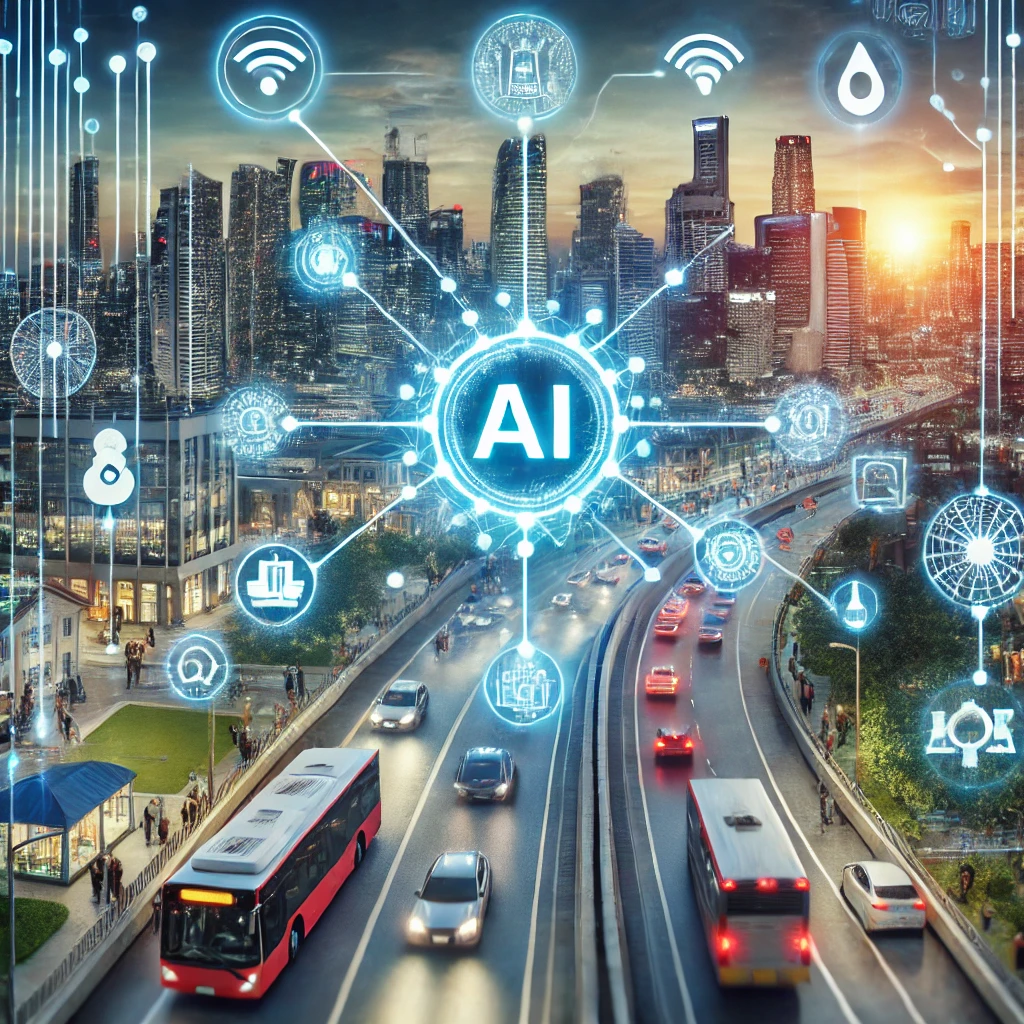
📌 Introduction: AI is Shaping the Future of Cities
As global populations grow and urbanization expands, cities are becoming more complex and congested. AI is stepping in to make cities smarter, more efficient, and sustainable. From intelligent traffic management to AI-powered waste disposal, artificial intelligence is enhancing city planning, optimizing infrastructure, and improving quality of life.
But how exactly is AI transforming modern urban living, and what does the future hold for AI-powered smart cities? Let’s explore.
1️⃣ AI in Traffic Management & Public Transportation
Congestion is a major urban challenge, and AI-powered traffic systems are helping to reduce delays, optimize routes, and improve public transportation efficiency.
🔹 How AI is Optimizing Urban Mobility
✅ Smart Traffic Lights – AI-controlled signals adjust in real-time to improve traffic flow and reduce congestion.
✅ Autonomous Public Transport – AI-powered buses, trains, and ride-sharing services enhance urban transit systems.
✅ Predictive Traffic Analysis – AI uses historical and real-time data to predict and prevent traffic jams.
🔍 Example:
- Google’s AI-driven traffic control system has reduced congestion by 20% in major cities.
- Singapore’s AI-powered Smart Bus system optimizes routes based on passenger demand and traffic conditions.
2️⃣ AI in Energy Management & Sustainability
AI is making cities more energy-efficient, reducing carbon footprints and improving power distribution systems.
🔹 How AI is Enhancing Urban Sustainability
✔ AI-Powered Smart Grids – AI balances electricity supply and demand in real time, reducing waste.
✔ AI for Renewable Energy Optimization – AI predicts solar and wind energy production, optimizing power distribution.
✔ Energy-Efficient Smart Buildings – AI regulates heating, cooling, and lighting to minimize energy consumption.
🔍 Example:
- Barcelona’s AI-powered energy management system has cut electricity wastage by 30% in government buildings.
- Google’s DeepMind AI reduces energy consumption in data centers by 40% using AI-driven cooling systems.
3️⃣ AI-Powered Waste Management & Water Conservation
AI is helping cities improve waste disposal, recycling, and water conservation efforts.
🔹 How AI is Revolutionizing Waste & Water Management
✔ AI-Driven Waste Collection – AI-powered garbage trucks detect waste levels and optimize collection routes.
✔ AI for Water Leakage Detection – AI monitors underground water pipelines, identifying leaks before they cause damage.
✔ Smart Recycling Systems – AI sorts recyclable materials, improving waste management efficiency.
🔍 Example:
- San Francisco’s AI-powered waste collection system has reduced landfill waste by 50%.
- AI-driven smart water grids in Amsterdam have cut water wastage by 20%.
4️⃣ AI in Public Safety & Crime Prevention
AI-powered surveillance and predictive policing tools are helping law enforcement agencies enhance urban safety.
🔹 How AI is Improving Public Safety
✔ AI-Based Crime Prediction – AI analyzes crime patterns and predicts high-risk areas.
✔ Facial Recognition & Smart Surveillance – AI-powered cameras detect suspicious activities in real time.
✔ AI for Emergency Response – AI alerts emergency services faster based on real-time event detection.
🔍 Example:
- China’s AI-driven surveillance system uses facial recognition to identify potential threats in public spaces.
- New York City’s AI-powered crime prediction models have helped reduce violent crime rates.
5️⃣ The Future of AI in Smart Cities
The next generation of AI-powered smart cities will be even more autonomous, interconnected, and data-driven.
🔮 AI Trends to Watch in Smart Cities
✅ AI-Powered Self-Driving Public Transport – Fully autonomous buses and taxis will redefine urban mobility.
✅ AI-Driven Sustainable Architecture – Smart buildings will automatically adjust for energy efficiency.
✅ AI in Smart Disaster Management – AI will predict and mitigate earthquakes, floods, and extreme weather events.
✅ AI-Powered City-Wide IoT Integration – Cities will operate as fully connected digital ecosystems.
🔍 Example:
- Dubai’s AI-driven Smart City 2030 Initiative is investing in AI-powered urban planning and autonomous public services.
🎯 Final Thoughts: AI is the Backbone of Smart Cities
AI is revolutionizing how cities function, making urban life safer, more efficient, and sustainable. With AI-driven public services, optimized energy grids, and autonomous transportation, smart cities will reshape how we live, work, and interact with technology.
💬 What do you think? Would you like to live in a fully AI-powered city? Let’s discuss in the comments! 🏙️
🚀 Take the Quiz: How Much Do You Know About AI in Smart Cities?
📌 Test your knowledge on AI’s role in transforming urban living!
[Start Quiz Now]
Your blog stands out in a sea of generic and formulaic content Your unique voice and perspective are what keep me coming back for more
Thank you so much for your kind words! 😊 I’m truly glad to hear that you find the content valuable and unique. I strive to bring fresh perspectives and insights to topics like AI in smart cities, and it’s wonderful to know that it resonates with you. Your feedback motivates me to keep creating more engaging and informative content. Thank you for your continued support!
This post truly brightened my day! I appreciate how you delve into the topic with such positivity and clarity. It’s refreshing to see content that not only informs but also uplifts the reader. Your writing style is engaging and always leaves me feeling inspired. Keep up the fantastic work!