
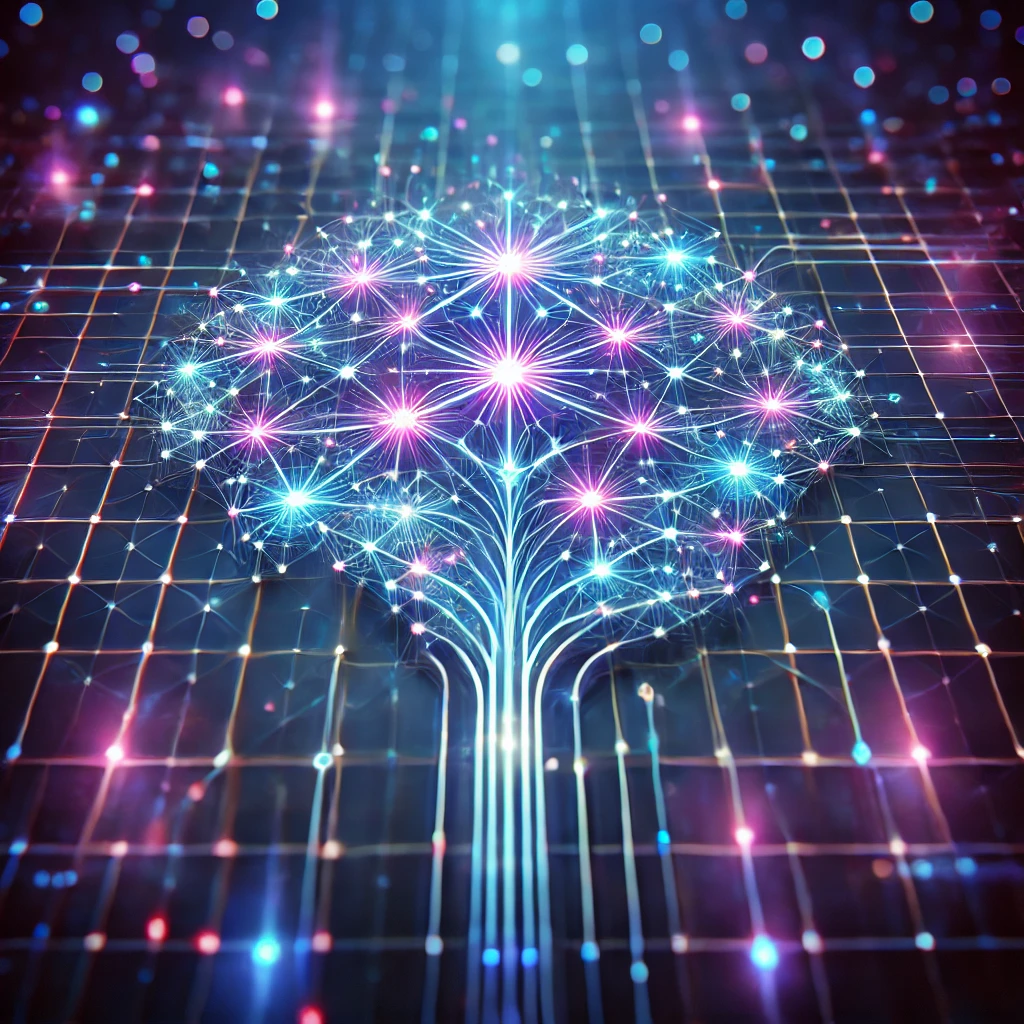
🧠 Introduction: What Are Neural Networks?
Neural networks are the backbone of modern artificial intelligence (AI), powering everything from facial recognition and chatbots to self-driving cars and medical diagnostics. Inspired by the structure of the human brain, these AI systems enable machines to learn, recognize patterns, and make intelligent decisions.
But what exactly are neural networks, and how do they work? In this guide, we’ll break down the fundamentals of neural networks, their architecture, applications, and future advancements in 2025 and beyond. 🚀
1️⃣ What Are Neural Networks and How Do They Work?
Neural networks are computational models that mimic the way the human brain processes information. They consist of interconnected layers of artificial neurons that analyze data, learn patterns, and make predictions.
Key Features of Neural Networks:
✔ Layered Structure: Neural networks have input, hidden, and output layers for processing data. ✔ Weighted Connections: Each neuron connects to others with weighted values that determine its influence. ✔ Non-Linearity: Uses activation functions to process complex relationships in data. ✔ Self-Learning Capability: Improves accuracy through training and feedback.
📌 Types of Neural Networks:
- Feedforward Neural Networks (FNN) – Basic neural architecture for pattern recognition.
- Convolutional Neural Networks (CNN) – Used for image and video processing.
- Recurrent Neural Networks (RNN) – Best for sequential data like text and speech.
- Transformers & Large Language Models (LLMs) – Powering AI chatbots and natural language processing.
2️⃣ How Do Neural Networks Function?
🛠️ The Core Technology Behind Neural Networks
Neural networks function by passing data through multiple layers, refining predictions at each step.
1️⃣ Input Layer: Accepts raw data (images, text, audio, etc.). 2️⃣ Hidden Layers: Processes and extracts meaningful patterns using weighted connections. 3️⃣ Activation Functions: Introduces non-linearity to enable deep learning. 4️⃣ Output Layer: Provides final predictions, classifications, or results.
📈 The Training Process:
1️⃣ Data Collection: The network is trained using labeled datasets. 2️⃣ Backpropagation & Optimization: Errors are corrected by adjusting the network’s weights. 3️⃣ Testing & Fine-Tuning: The model is evaluated and optimized for accuracy.
🔍 Example: A neural network trained for handwritten digit recognition learns to classify numbers (0-9) from images by identifying edges, curves, and structures.
3️⃣ Applications of Neural Networks in Different Industries
📚 Natural Language Processing & AI Chatbots
- AI assistants like ChatGPT and Gemini use transformer-based neural networks.
- Automated language translation and sentiment analysis.
🎨 AI in Image & Video Processing
- Face recognition for security and authentication.
- AI-generated art and deepfake detection.
- Automated video enhancement and filtering.
💼 Business & Finance
- AI-driven fraud detection and risk assessment.
- Neural networks predict stock market trends and financial analytics.
- Intelligent customer service chatbots for automated business interactions.
🏥 Healthcare & Medicine
- AI-powered diagnostic tools detecting diseases from medical images.
- Neural networks help in drug discovery and genomics research.
- AI-assisted robotic surgeries for precision healthcare.
🚗 Autonomous Vehicles & Robotics
- Neural networks enable self-driving cars to recognize objects and navigate.
- AI-powered robots perform manufacturing and warehouse automation.
🚀 Scientific Research & Space Exploration
- AI models analyze climate patterns and astronomical data.
- Neural networks assist in predicting space weather and cosmic events.
4️⃣ Challenges & Ethical Considerations of Neural Networks
⚠️ Bias & Fairness in AI
🔴 Neural networks can inherit biases from their training data. 🔴 Efforts are being made to reduce bias in AI decision-making.
🔒 Privacy & Data Security
🔴 AI systems require vast amounts of data, raising concerns about user privacy. 🔴 Regulations like GDPR help protect user data in AI applications.
💰 Computational Costs & Energy Usage
🔴 Training deep neural networks requires high computational power. 🔴 AI companies are working on efficient models to reduce energy consumption.
🛠️ Explainability & Transparency
🔴 Neural networks act as black boxes, making it hard to interpret their decisions. 🔴 Explainable AI (XAI) is being developed to improve trust and transparency.
📌 How Can We Make Neural Networks Ethical? ✔ Fair AI training practices and unbiased datasets. ✔ More transparent AI decision-making frameworks. ✔ Energy-efficient AI models to reduce environmental impact.
5️⃣ The Future of Neural Networks: What’s Next?
🔮 Key Predictions for 2025 & Beyond
✅ Hyper-Advanced AI Assistants: AI models will have near-human reasoning capabilities. ✅ Smaller, More Efficient Models: Neural networks will become lighter and require less computing power. ✅ AI-Generated Creativity: AI-powered music, storytelling, and real-time art generation will evolve. ✅ Improved AI Regulations: More governments will enforce AI fairness and accountability laws. ✅ Neural Networks in Space Tech: AI-driven autonomous spacecraft navigation and cosmic discoveries.
🎯 Final Thoughts: Are Neural Networks the Future of AI?
Neural networks have revolutionized AI, powering chatbots, robotics, medical AI, and even creative applications. As AI continues to evolve, neural networks will remain at the heart of deep learning and artificial intelligence. However, balancing performance, fairness, and transparency will be essential in shaping AI’s future.
🚀 What do you think about Neural Networks? Will they push AI to new heights, or do they pose ethical risks? Let’s discuss in the comments!