
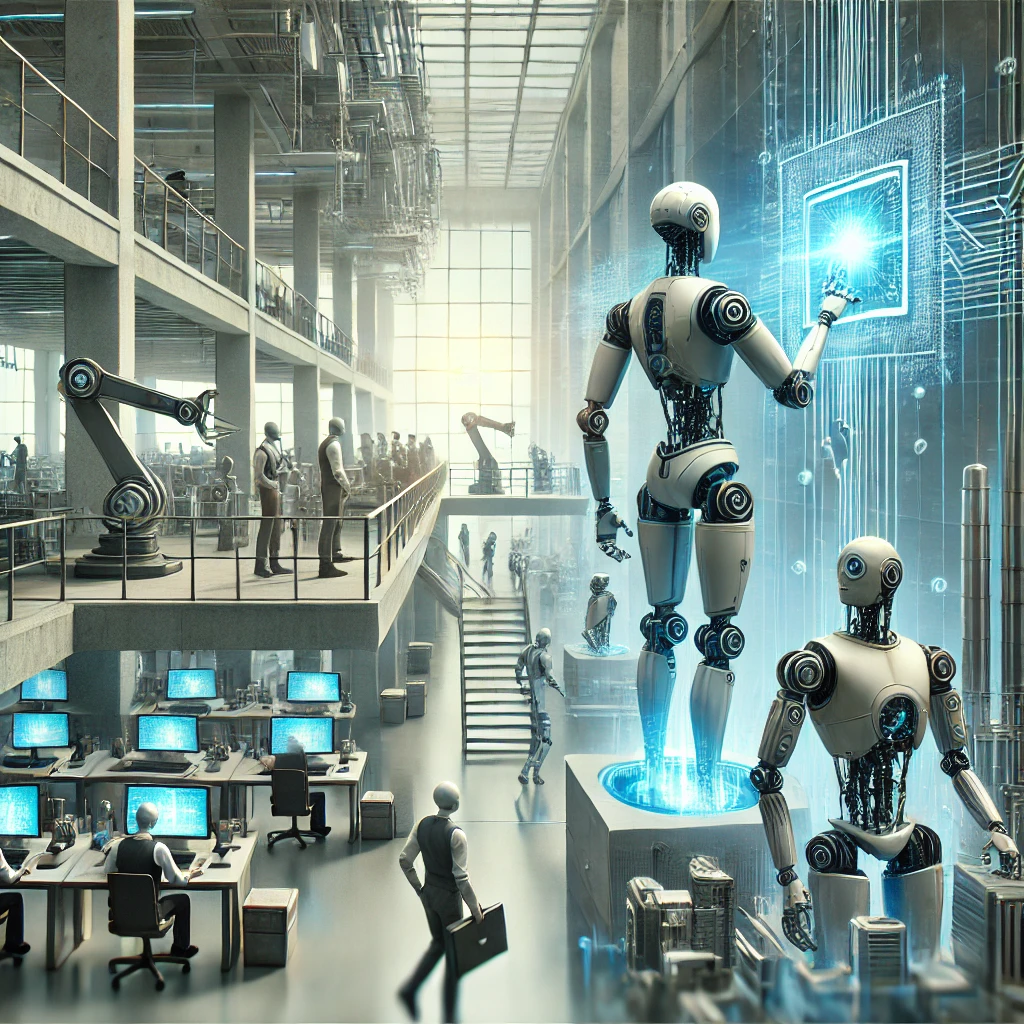
🧠 Introduction: The Impact of Automation on the Workforce
With the rise of artificial intelligence (AI) and automation, industries are rapidly transforming, leading to concerns about job displacement. From self-checkout machines to AI-powered customer service chatbots, many tasks that once required human workers are now automated.
But does this mean robots will take over all jobs? Or will automation create new opportunities for the workforce? In this blog, we explore the impact of automation on employment, industries most affected, and how humans can adapt in the age of AI. 🚀
1️⃣ How Is Automation Disrupting the Job Market?
Automation refers to the use of AI, robotics, and machine learning to perform tasks with minimal human intervention. While automation increases efficiency and reduces costs, it also eliminates certain job roles.
Key Ways AI and Automation Affect Employment:
✔ Job Replacement: Repetitive, manual jobs are increasingly being automated.
✔ Job Augmentation: AI is assisting workers, making them more productive rather than replacing them.
✔ New Job Creation: As old jobs disappear, new AI-driven careers are emerging.
📌 Industries Most Affected by Automation:
- Manufacturing & Warehousing – Automated assembly lines and robotic warehouses.
- Retail & Customer Service – AI-powered chatbots and self-checkout kiosks.
- Finance & Accounting – AI automates financial reporting and fraud detection.
- Healthcare – AI-driven diagnostics, robotic surgeries, and virtual assistants.
- Transportation & Delivery – Self-driving cars and automated logistics systems.
2️⃣ Jobs at Risk vs. Jobs Created by AI
🛠️ Jobs Most Vulnerable to Automation
🔴 Routine-based jobs with repetitive tasks are at the highest risk.
- Data entry clerks 🏢
- Cashiers 🛒
- Factory and assembly line workers 🏭
- Telemarketers 📞
- Travel agents 🏝️
📈 Emerging Jobs in the AI Age
🟢 AI is also creating high-demand careers in tech and automation-related fields.
- AI and machine learning engineers 🤖
- Data scientists 📊
- Cybersecurity analysts 🔐
- Robotics specialists 🤖
- Digital marketing and AI-driven content creators 📝
🔍 Example: While AI chatbots may replace some customer service jobs, they also create roles for AI trainers, chatbot developers, and NLP engineers.
3️⃣ How to Adapt and Future-Proof Your Career
As industries evolve, professionals must reskill and upskill to stay relevant in the workforce.
✅ Strategies to Stay Competitive in the AI Era
✔ Develop Soft Skills: Creativity, emotional intelligence, and communication skills are harder to automate.
✔ Learn AI & Data Skills: Basic knowledge of AI, coding, and data analytics can give job seekers an edge.
✔ Embrace Lifelong Learning: Online courses, certifications, and workshops can help professionals stay ahead.
✔ Focus on Human-Centric Roles: Careers in healthcare, education, psychology, and arts remain resilient to automation.
📌 Best Fields for Future-Proof Jobs:
- AI and software development 💻
- Healthcare and caregiving 🏥
- Renewable energy and sustainability 🌍
- Education and training 📚
- UX/UI design and human-AI interaction 🎨
4️⃣ Ethical and Economic Concerns of Job Automation
⚠️ Rising Unemployment & Income Inequality
🔴 AI-driven automation could widen the gap between high-skilled and low-skilled workers.
🔴 Some workers may struggle to find new employment in a highly automated world.
🛠️ The Responsibility of Companies & Governments
🔴 Governments must introduce policies for reskilling workers and social safety nets.
🔴 Companies should invest in AI ethics and responsible workforce transitions.
📌 Possible Solutions:
✔ Universal Basic Income (UBI): Providing financial support for displaced workers.
✔ AI and Human Collaboration: Using AI to augment jobs rather than replace them.
✔ Retraining and Skill Development Programs: Preparing workers for AI-driven jobs.
🔍 Example: Companies like Amazon and Google are investing in AI training programs to help employees transition into tech-based careers.
5️⃣ The Future of Work: What’s Next?
🔮 Key Predictions for 2025 & Beyond
✅ More Human-AI Collaboration: AI will assist rather than replace most jobs.
✅ AI Legislation & Ethical Regulations: Governments will enforce AI workforce policies.
✅ Hybrid Work Models: AI-powered automation will reshape how we work, blending human creativity with machine efficiency.
✅ Increased Demand for Reskilling Programs: Education systems will evolve to prepare future workers for AI-driven industries.
🎯 Final Thoughts: Should We Fear Job Automation?
While AI and automation are eliminating repetitive jobs, they are also creating new career opportunities in tech, healthcare, education, and AI-driven industries. The key to thriving in the AI era is to adapt, reskill, and embrace lifelong learning.
🚀 How do you see AI shaping the future of work? Will automation create more jobs than it eliminates? Let’s discuss in the comments!