
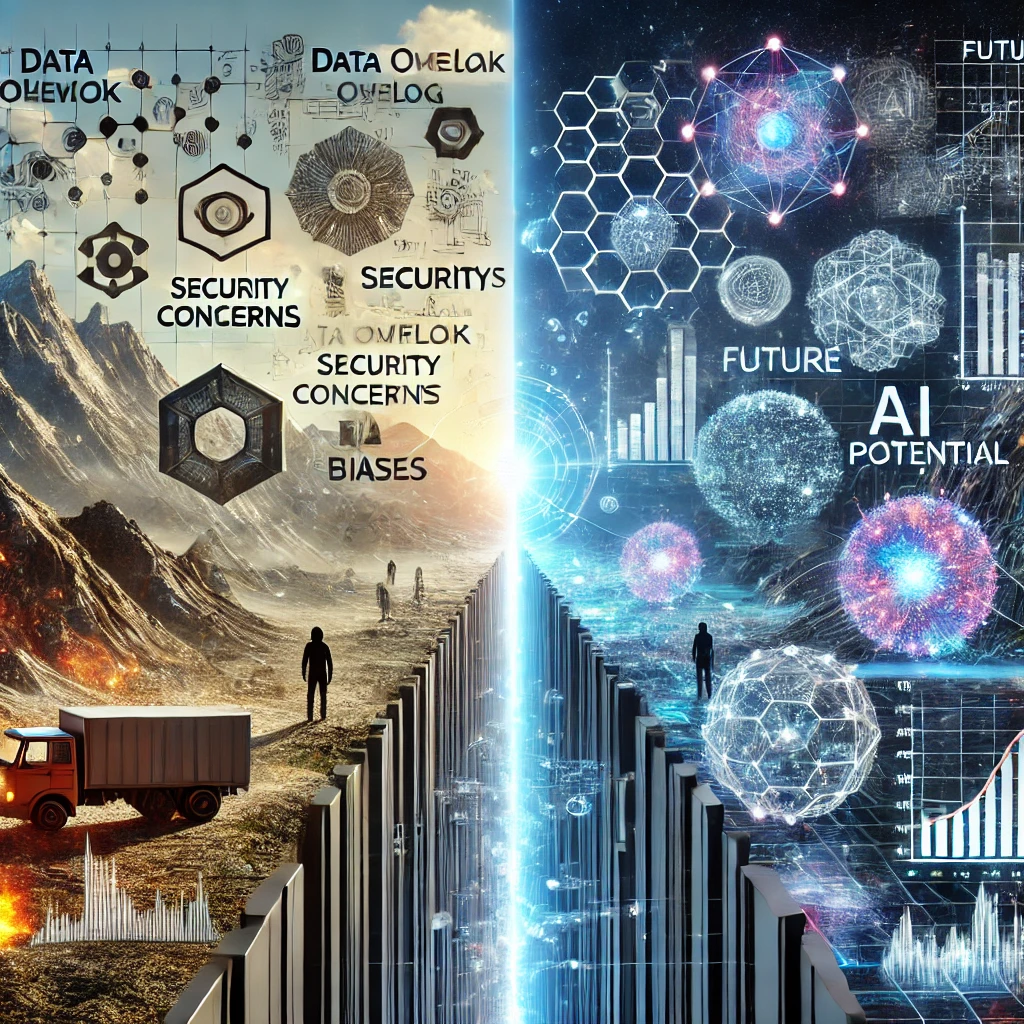
📌 Introduction: The Evolution and Challenges of AI-Powered Search
AI-powered search engines like DeepSeek AI have transformed the way we retrieve, analyze, and process information. Unlike traditional search engines, DeepSeek leverages machine learning, deep search algorithms, and contextual understanding to deliver precise and relevant results. However, as promising as AI-powered search is, it still faces technical, ethical, and operational challenges that must be addressed for future advancements.
So, what are the key hurdles preventing AI search from reaching its full potential? And how can DeepSeek AI evolve to become the most reliable search engine of the future? In this blog, we’ll explore the biggest challenges DeepSeek faces today and the innovations that could redefine AI search in the future.
1️⃣ Current Challenges of DeepSeek AI-Powered Search
Despite its advanced capabilities, DeepSeek AI encounters various obstacles that limit its effectiveness across different applications.
🔹 Major Challenges AI-Powered Search Faces
🔴 1. Data Overload & Processing Complexity
- AI search engines process billions of data points in real-time, making efficient sorting and retrieval a significant challenge.
- DeepSeek AI must filter, rank, and prioritize results intelligently, but dealing with misleading information and fake news remains difficult.
🔍 Example:
- If a user searches for “climate change scientific consensus”, DeepSeek must navigate through biased sources, misinformation, and scientific studies to provide the most accurate result.
🔴 2. Bias in AI Search Results
- AI search engines can inadvertently inherit biases from training data, resulting in favoritism towards certain perspectives or sources.
- Ensuring neutral and unbiased AI-generated results is an ongoing challenge for DeepSeek AI developers.
🔍 Example:
- If a user searches for “best political policies for economic growth”, DeepSeek AI might prioritize sources aligned with its training data’s biases rather than offering balanced viewpoints.
🔴 3. Security & Privacy Risks
- AI search engines store and analyze vast amounts of user data, raising concerns about privacy, tracking, and data security.
- Ensuring that user searches remain confidential and unexploited for targeted advertising is a major challenge.
🔍 Example:
- If DeepSeek AI collects user behavioral patterns, could companies misuse this data for marketing or surveillance purposes?
🔴 4. Understanding Complex Queries & Context
- AI struggles with interpreting ambiguous, multi-layered queries, often leading to irrelevant or overly broad results.
- DeepSeek AI must continuously enhance its NLP (Natural Language Processing) capabilities to handle complex, intent-based searches.
🔍 Example:
- A query like “How does quantum computing impact AI model training?” requires deep contextual understanding that AI still struggles to perfect.
🔴 5. Keeping Up with Real-Time Information
- AI-powered search engines must continuously index and analyze evolving data across the web.
- Misinformation, outdated sources, and dynamically changing events make real-time updates a critical challenge.
🔍 Example:
- Searching for “current stock market trends influenced by AI automation” requires DeepSeek AI to pull the latest, verified financial data—not outdated reports.
2️⃣ The Future of DeepSeek AI: What’s Next for AI-Powered Search?
Despite these challenges, DeepSeek AI has the potential to reshape search technology with groundbreaking innovations.
🔹 Future Advancements in AI Search Technology
✅ 1. AI-Powered Contextual Awareness
- DeepSeek AI will move beyond simple keyword matching and begin understanding deeper user intent.
- Advanced semantic search will grasp the context behind queries, delivering more personalized and relevant results.
🔍 Example:
- Searching “best AI tools for video editing” will prioritize feature-rich AI solutions over generic, ad-driven lists.
✅ 2. Bias-Free & Fair Search Algorithms
- Future AI search engines will implement bias detection frameworks, ensuring neutral search results that provide balanced perspectives.
- DeepSeek AI will integrate ethical AI frameworks to prevent favoritism in search rankings.
🔍 Example:
- If a user searches for “pros and cons of blockchain technology”, AI will provide unbiased reports rather than skewed promotional content.
✅ 3. AI-Driven Personalized Search Experiences
- DeepSeek AI will create user-tailored search experiences, refining results based on individual research interests, previous searches, and intent analysis.
- Instead of one-size-fits-all results, AI will adjust to user needs dynamically.
🔍 Example:
- A data scientist searching for deep learning frameworks will receive code-based and academic references, while a business analyst gets industry case studies.
✅ 4. Real-Time Fact-Checking & Source Validation
- Future AI-powered search will analyze credibility scores of sources, ensuring results are verified, fact-checked, and up-to-date.
- AI will flag outdated, misleading, or false information in real-time.
🔍 Example:
- Searching for “latest AI regulations in Europe” will only return trusted, official government updates instead of outdated legal discussions.
✅ 5. Multimodal Search Capabilities
- DeepSeek AI will enable searching beyond text—integrating image, voice, and video recognition to deliver more comprehensive results.
- Users will be able to speak, upload files, or use images to find relevant information.
🔍 Example:
- A designer looking for color palettes could upload an image, and DeepSeek AI would return AI-generated theme suggestions.
✅ 6. Decentralized & Privacy-Focused AI Search
- Future search engines will reduce reliance on centralized databases, prioritizing privacy-first AI search solutions.
- DeepSeek AI may adopt blockchain-based security to prevent data exploitation.
🔍 Example:
- Users will be able to search anonymously without their data being stored, tracked, or sold for advertising.
3️⃣ Final Thoughts: Where is DeepSeek AI Headed?
AI-powered search engines like DeepSeek AI are at the forefront of redefining knowledge access. However, challenges such as bias, security, real-time indexing, and contextual understanding still need improvement.
As AI search technology evolves, DeepSeek AI is expected to become faster, more reliable, and ethically robust, offering businesses, researchers, and individuals a smarter way to retrieve information.
💬 What do you think is the biggest challenge in AI-powered search? Share your thoughts in the comments below!