
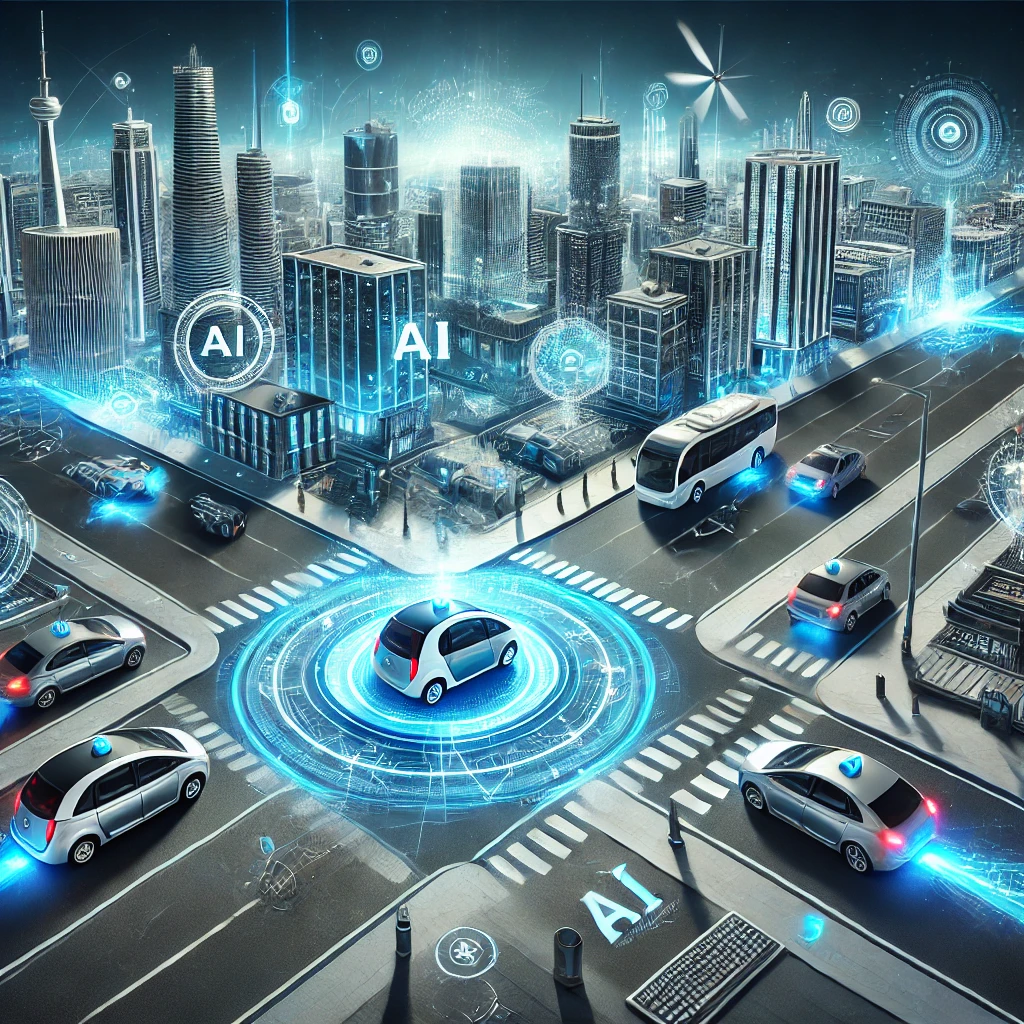
🚗 Introduction: The Road to Self-Driving Cars
The automotive industry is undergoing a historic transformation with the rise of autonomous vehicles (AVs). AI-powered self-driving cars are no longer science fiction—they are becoming a reality, redefining urban mobility, logistics, and road safety. From Tesla’s Full Self-Driving (FSD) system to Waymo’s autonomous taxis, major advancements in artificial intelligence, sensors, and connectivity are making driverless cars possible.
But how do autonomous vehicles work? What challenges do they face? And how will they impact jobs, safety, and the economy? Let’s explore the world of self-driving technology and its future. 🚀
1️⃣ How Do Autonomous Vehicles Work?
Autonomous vehicles use a combination of AI, sensors, and real-time data processing to navigate roads without human intervention. These self-driving systems rely on:
✔ Computer Vision: AI processes live camera feeds to recognize pedestrians, vehicles, and road signs.
✔ LiDAR & Radar Sensors: Detects objects, obstacles, and distances in real time.
✔ AI & Machine Learning: Continuously learns from driving data to improve decision-making.
✔ GPS & Connectivity: Uses satellite data and high-definition maps for precise navigation.
✔ Advanced Control Systems: Predicts and executes smooth, real-time driving actions.
📌 Levels of Autonomy (SAE Standard):
- Level 0 – No automation (human driver required).
- Level 1 – Driver assistance (adaptive cruise control, lane-keeping).
- Level 2 – Partial automation (Tesla’s Autopilot, GM’s Super Cruise).
- Level 3 – Conditional automation (AI can handle some driving tasks).
- Level 4 – High automation (Waymo’s fully autonomous taxis).
- Level 5 – Full automation (No human driver needed at all).
🔍 Example: Tesla’s FSD Beta can handle city driving but still requires human supervision, while Waymo’s taxis operate fully autonomously in select locations.
2️⃣ Key Benefits of Autonomous Vehicles
🚦 Increased Road Safety
- AI-powered AVs can reduce human errors, which cause over 90% of road accidents.
- Self-driving systems react faster than human drivers in emergencies.
- Drunk and distracted driving-related crashes can be minimized.
🌍 Eco-Friendly and Fuel-Efficient Driving
- AI optimizes driving patterns, reducing fuel consumption and emissions.
- Smart traffic management leads to less congestion and pollution.
- Many AVs are electric vehicles (EVs), promoting sustainability.
🚗 Convenience and Mobility for All
- AVs can provide accessible transportation for elderly and disabled individuals.
- Autonomous ride-sharing services lower transportation costs.
- AI-powered deliveries and logistics improve efficiency and speed.
3️⃣ Challenges and Ethical Concerns
⚠️ Job Loss in the Transportation Industry
🔴 Millions of driving jobs (truck drivers, taxi operators) may be at risk.
🔴 New jobs in AI maintenance, cybersecurity, and AV system management will emerge.
🛠️ Regulatory and Legal Barriers
🔴 Liability issues: Who is responsible in an AV crash—the car manufacturer or the owner?
🔴 Governments must create global safety standards and regulations for AV deployment.
🔒 AI Ethics & Security Risks
🔴 Self-driving cars are vulnerable to hacking and cybersecurity threats.
🔴 AVs must make ethical decisions (e.g., avoiding pedestrians in unavoidable crashes).
📌 Example: If an AV must choose between hitting a pedestrian or swerving into oncoming traffic, how should the AI decide?
4️⃣ Future of Autonomous Vehicles: What’s Next?
🔮 Key Predictions for 2025 & Beyond
✅ Wider adoption of self-driving taxis in urban areas (Waymo, Cruise, Zoox).
✅ More Level 3 & Level 4 AVs on public roads, pending regulations.
✅ AI-driven trucking for long-haul transportation, reducing costs.
✅ Integration of AVs with smart city infrastructure for traffic optimization.
✅ Improved battery technology for AVs, making them more energy-efficient.
🎯 Final Thoughts: Are Autonomous Vehicles the Future of Transportation?
Autonomous vehicles have the potential to revolutionize mobility, making driving safer, more efficient, and environmentally friendly. However, challenges such as regulatory approval, ethical decision-making, and job disruption must be addressed.
🚀 Do you trust self-driving cars? Will AVs dominate the roads in the next decade? Let’s discuss in the comments!