
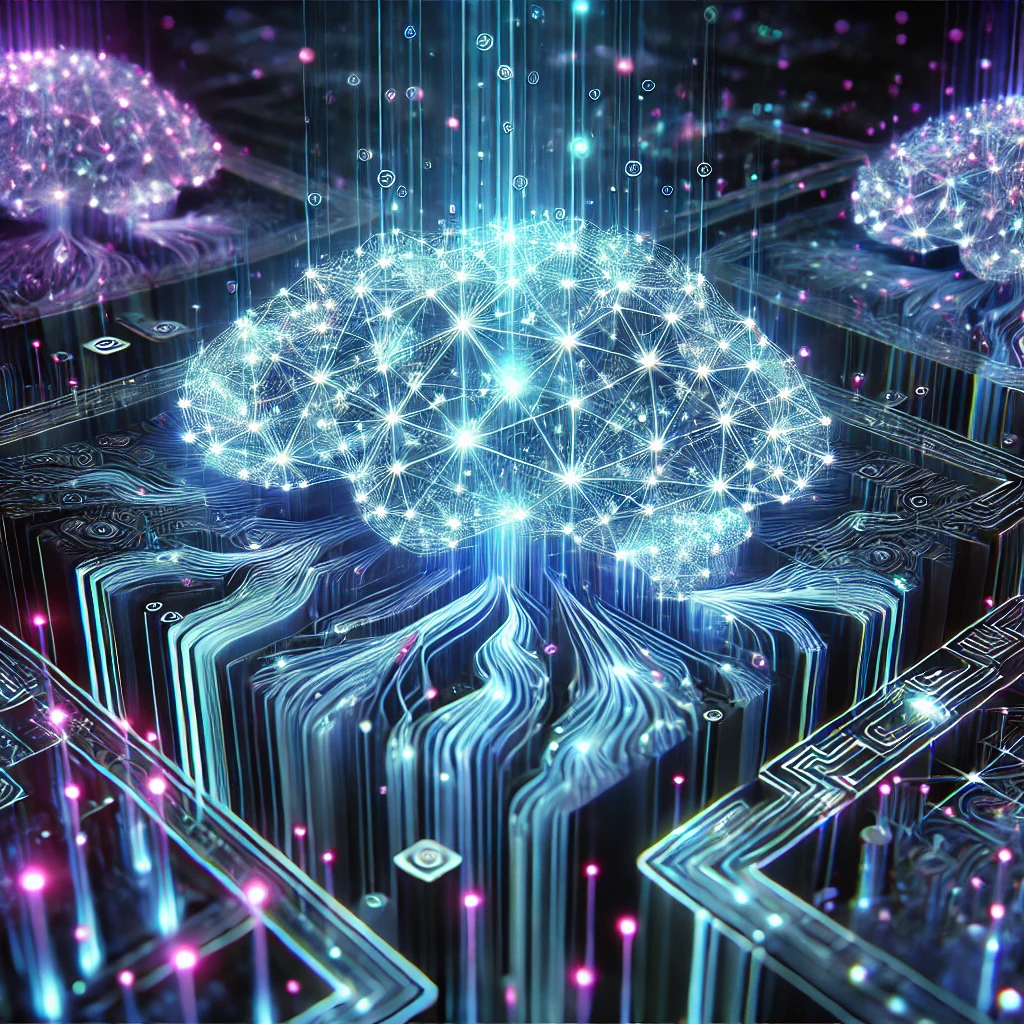
🧠 Introduction: What is Deep Learning?
Deep Learning is one of the most transformative advancements in Artificial Intelligence (AI), powering everything from self-driving cars to speech recognition, medical diagnostics, and generative AI. Unlike traditional machine learning, deep learning allows AI systems to analyze data, recognize patterns, and make decisions with little to no human intervention.
But what exactly is deep learning? How does it work, and why is it so powerful? In this guide, we’ll break down the fundamentals, applications, and future of deep learning in 2025 and beyond. 🚀
1️⃣ What is Deep Learning and How Does it Work?
Deep Learning is a subset of Machine Learning (ML) that uses Artificial Neural Networks (ANNs) modeled after the human brain. These networks consist of multiple layers, enabling AI to process and interpret vast amounts of complex data.
Key Features of Deep Learning:
✔ Multi-layered Neural Networks: Deep learning models use multiple layers of neurons to process information hierarchically. ✔ Feature Extraction: Learns important patterns and representations from raw data. ✔ Self-Learning Capabilities: Improves performance over time without manual intervention. ✔ High Computational Power: Requires GPUs and TPUs for efficient training and inference.
📌 Popular Deep Learning Models in 2025:
- GPT-5 & Claude 3 – Advanced natural language processing.
- DALL·E 3 & MidJourney AI – AI-generated visuals and art.
- Tesla’s Full Self-Driving (FSD) AI – Autonomous vehicle decision-making.
- AlphaFold AI (DeepMind) – Protein structure prediction for medical research.
2️⃣ How Does Deep Learning Work?
🛠️ The Core Technology Behind Deep Learning
Deep Learning relies on Neural Networks, which are composed of:
1️⃣ Input Layer: Receives raw data (text, images, speech, etc.). 2️⃣ Hidden Layers: Process the data using weighted connections and activation functions. 3️⃣ Output Layer: Produces predictions or classifications based on input data.
📈 The Training Process:
1️⃣ Data Collection: AI is trained on massive datasets. 2️⃣ Neural Network Processing: The model learns relationships and patterns. 3️⃣ Backpropagation & Optimization: Adjusts weights to reduce errors. 4️⃣ Inference & Predictions: Once trained, the AI can make accurate predictions in real time.
🔍 Example: A deep learning-powered image recognition AI can identify objects (cars, people, animals) in a photo with high accuracy based on prior training data.
3️⃣ Applications of Deep Learning Across Industries
📚 Natural Language Processing (NLP) & Chatbots
- AI chatbots like ChatGPT and Claude generate human-like responses.
- Automated translations improve global communication.
- AI-based sentiment analysis helps brands understand customer feedback.
🎨 AI-Generated Art & Content Creation
- AI-powered image generation and video editing tools.
- Deep learning assists in scriptwriting, music composition, and animation.
- AI enhances virtual reality (VR) experiences.
💼 Business & Automation
- AI-powered data analytics and predictive modeling.
- AI enhances fraud detection and risk assessment.
- Intelligent automation optimizes supply chains and logistics.
🏥 Healthcare & Medical Research
- AI diagnoses diseases faster and more accurately.
- AI predicts patient treatment responses.
- Drug discovery is accelerated using deep learning simulations.
🚗 Autonomous Vehicles & Robotics
- AI-powered self-driving cars make real-time driving decisions.
- AI-assisted robots perform warehouse automation and logistics tasks.
- AI enhances industrial manufacturing and quality control.
🔍 Scientific Discovery & Space Exploration
- AI models predict climate change trends and weather patterns.
- AI helps analyze astronomical data for space research.
- AI-powered genetic research accelerates medical breakthroughs.
4️⃣ Challenges & Ethical Concerns of Deep Learning
⚠️ Data Privacy & Security Risks
🔴 AI models require vast amounts of personal data for training. 🔴 Data breaches and misuse can lead to serious privacy concerns.
🤖 Bias in AI Models
🔴 AI can inherit biases from training data, leading to unfair predictions. 🔴 Researchers are working on bias mitigation strategies to ensure fair AI systems.
💰 High Computational Costs
🔴 Training deep learning models is expensive and resource-intensive. 🔴 Companies are developing energy-efficient AI models to reduce costs.
🛠️ AI Explainability & Transparency
🔴 Deep learning models act as black boxes, making decisions difficult to interpret. 🔴 Explainable AI (XAI) is being developed to increase transparency in AI models.
📌 How Can We Make Deep Learning Ethical? ✔ Implement AI governance policies and data privacy regulations. ✔ Use diverse and unbiased datasets for AI training. ✔ Enhance AI explainability and human oversight.
5️⃣ The Future of Deep Learning: What’s Next?
🔮 Key Predictions for 2025 & Beyond
✅ Hyper-Personalized AI Assistants: AI will adapt to individual users for seamless experiences. ✅ AI-Powered Creativity Tools: AI-generated music, art, and storytelling will evolve. ✅ More Efficient AI Models: Low-energy deep learning frameworks will become mainstream. ✅ AI in Space Exploration: AI will assist in mapping new planets and analyzing cosmic data. ✅ Stronger AI Ethics & Governance: More regulations will be enforced to ensure fair and safe AI.
🎯 Final Thoughts: Is Deep Learning the Future of AI?
Deep learning has already revolutionized industries, from healthcare and automation to creative content generation and scientific research. As AI continues to evolve, deep learning will remain at the core of the next generation of intelligent systems. However, addressing ethical concerns and computational efficiency will be crucial to unlocking AI’s full potential.
🚀 What are your thoughts on deep learning? Is it the key to AI’s future, or does it come with too many risks? Let’s discuss in the comments!