
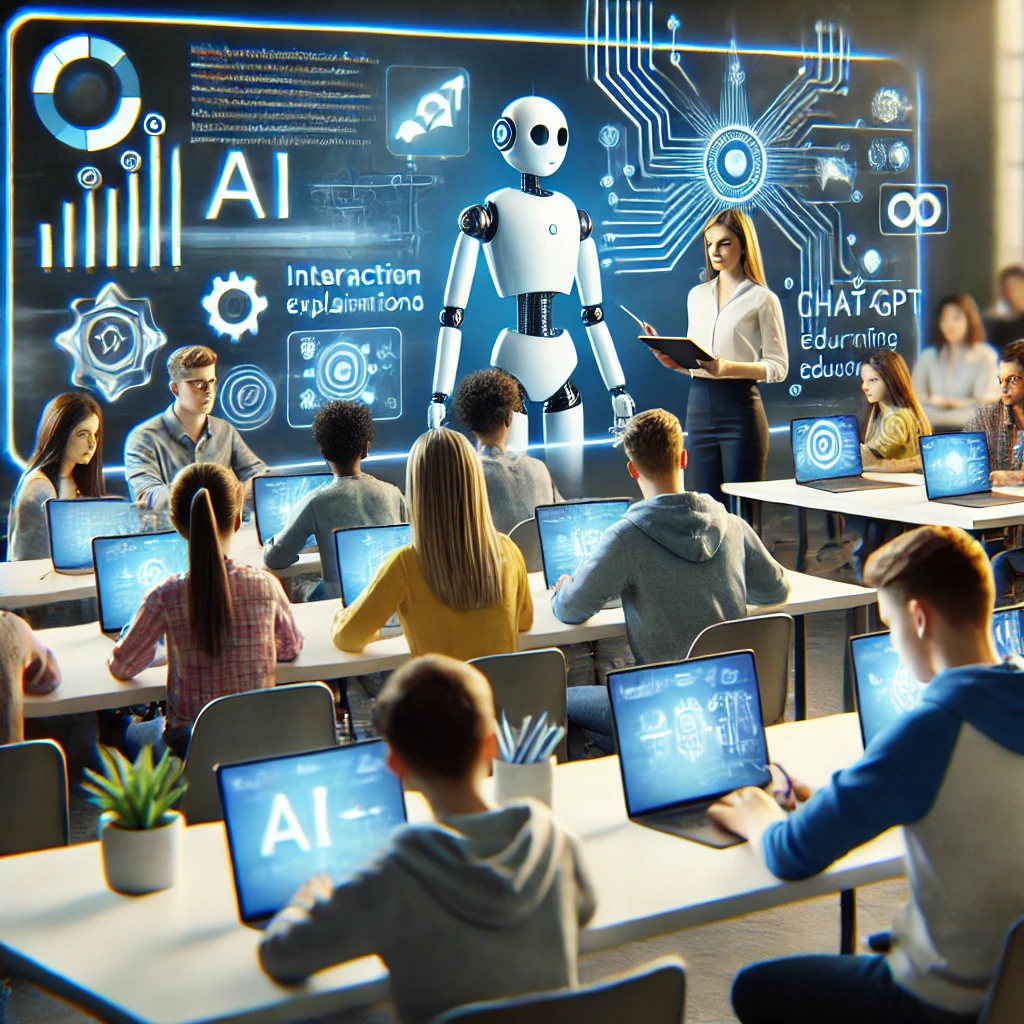
💡 Introduction: The AI-Powered Classroom Revolution
The rise of AI in education is reshaping the way students learn, research, and collaborate. ChatGPT, an advanced AI assistant, is being used to enhance personalized learning, assist teachers, and make education more accessible and interactive.
But how exactly can students and educators use ChatGPT to improve their learning experience? Let’s dive into the practical applications, benefits, and challenges of integrating ChatGPT in modern education! 🎓📖
1️⃣ How Students Can Use ChatGPT for Learning
📝 1. AI-Powered Study Assistance
✔ ChatGPT can answer academic questions instantly.
✔ Helps with summarizing textbooks, research papers, and articles.
✔ Explains complex concepts in simple language.
🚀 Example: A student struggling with calculus can ask ChatGPT to break down equations step by step.
✅ Best for: Homework help, quick explanations, and revision.
📚 2. AI-Generated Research Assistance
✔ ChatGPT provides summaries of research papers.
✔ Helps generate ideas for essays and reports.
✔ Suggests credible sources and reference materials.
🚀 Example: A college student writing a thesis on climate change can use ChatGPT to summarize key studies and generate citations.
✅ Best for: Research papers, thesis writing, and academic projects.
✍️ 3. Essay Writing & Content Creation
✔ Helps generate structured outlines for essays.
✔ Improves grammar, clarity, and writing style.
✔ Suggests better phrasing and sentence structures.
🚀 Example: ChatGPT can help a student rewrite a draft to make it clearer and more persuasive.
✅ Best for: Essay writing, assignments, and language learning.
2️⃣ How Educators Can Use ChatGPT in Teaching
📖 1. Personalized Learning & Tutoring
✔ Creates customized learning paths for students.
✔ Provides instant feedback on assignments and tests.
✔ Assists teachers in adapting lessons based on student progress.
🚀 Example: A teacher can use ChatGPT to generate different difficulty levels of quizzes for students.
✅ Best for: Personalized teaching and adaptive learning.
📊 2. Automating Administrative Tasks
✔ AI can help generate lesson plans and syllabus structures.
✔ Automates grading quizzes and assessments.
✔ Helps create engaging classroom activities.
🚀 Example: A teacher can use ChatGPT to generate discussion questions for a literature class.
✅ Best for: Saving time on routine tasks.
🗣️ 3. Enhancing Classroom Engagement
✔ Creates interactive learning experiences.
✔ Helps generate debate topics and discussion prompts.
✔ Can be used in gamified learning & AI-powered quizzes.
🚀 Example: A history teacher can use ChatGPT to simulate historical conversations for students.
✅ Best for: Making learning more engaging and fun.
3️⃣ Challenges & Ethical Considerations
🔴 AI should not replace critical thinking.
🔴 ChatGPT might provide incorrect or outdated information.
🔴 Over-reliance on AI can affect creativity and independent problem-solving skills.
📌 Solution: Educators should teach students how to fact-check AI-generated content and use it as a learning tool, not a replacement for learning.
🎯 Final Thoughts: The Future of AI in Education
🚀 AI like ChatGPT is not here to replace teachers, but to assist them!
🔹 For students → AI can enhance learning & productivity.
🔹 For teachers → AI can automate tasks & personalize education.
💡 How do you think AI will change the education system? Share your thoughts below! 👇