
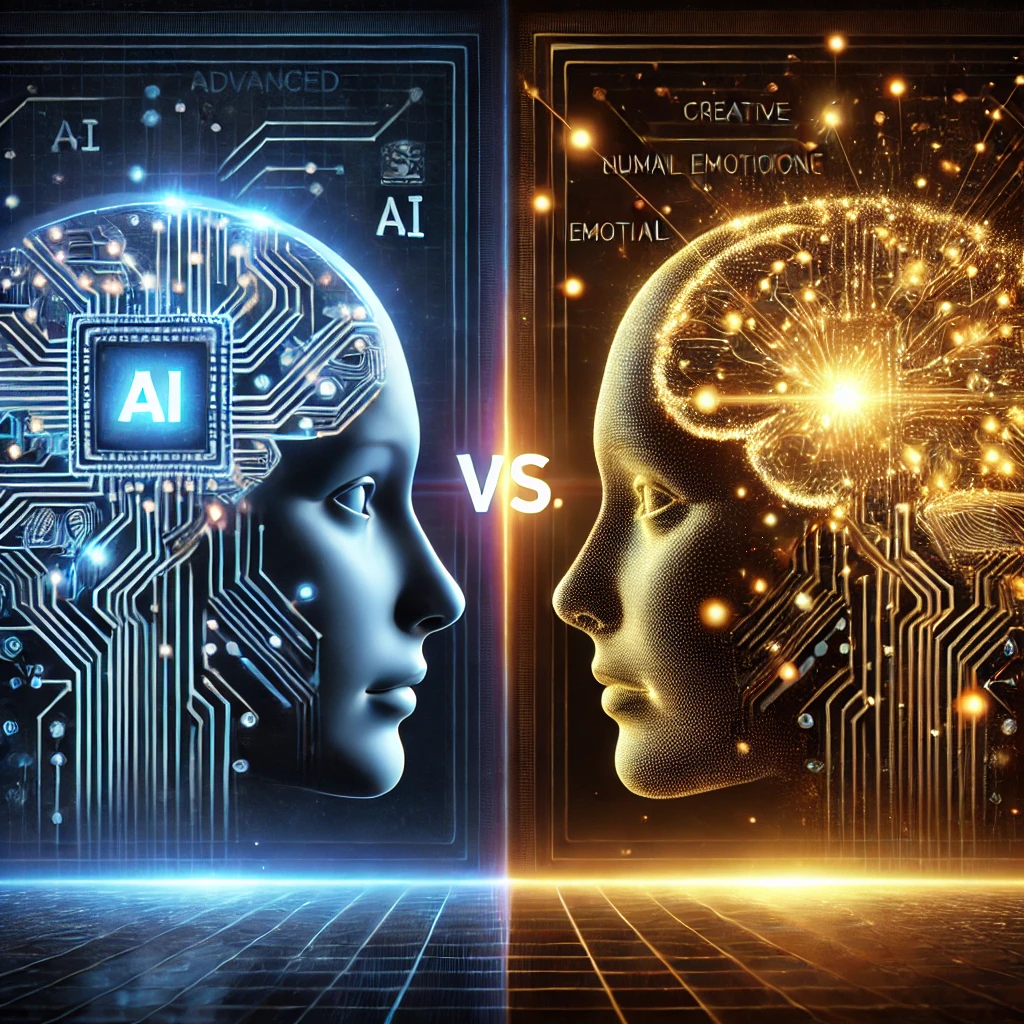
🧠 Introduction: Can ChatGPT Truly “Think” Like a Human?
One of the most debated topics in artificial intelligence is whether AI models like ChatGPT can think and process language like humans. 🤔
ChatGPT has evolved dramatically, now capable of: ✅ Understanding complex language structures
✅ Mimicking human-like reasoning
✅ Generating creative, context-aware responses
But does this mean ChatGPT is truly “thinking”? Or is it just following advanced algorithms with no real comprehension? Let’s deep dive into its NLP (Natural Language Processing) capabilities and how they compare to human cognition. 🚀
1️⃣ How Does ChatGPT Understand Language?
Unlike humans, ChatGPT does not think or understand language the way we do. Instead, it relies on:
- Neural Networks to recognize patterns in text
- Large-Scale Training Data to predict responses
- Deep Learning Algorithms to generate human-like text
🔹 How It Works:
- Tokenization – Breaks text into small units (tokens)
- Pattern Recognition – Identifies relationships between words
- Predictive Modeling – Generates responses based on probability
🛠️ Example:
- User: “Why is the sky blue?”
- ChatGPT: “The sky appears blue due to the scattering of sunlight by Earth’s atmosphere, a phenomenon called Rayleigh scattering.”
It doesn’t “understand” like a human but predicts the best response based on learned data.
2️⃣ Human-Like Thinking vs. AI’s Processing
🧠 Key Differences Between AI & Human Thought
| Feature | Human Thinking 🤯 | ChatGPT’s AI Processing 🤖 |
|---|---|---|
| Emotion & Intent | Understands emotions, tone, and intent | Mimics tone but lacks real emotion |
| Creativity & Intuition | Thinks outside patterns, innovates | Generates creative responses based on probability |
| Memory & Learning | Learns over time, retains personal experiences | Limited memory, processes each conversation independently (unless memory feature is enabled) |
| Decision-Making | Considers emotions, ethics, and personal experiences | Predicts responses based on training data |
🛠️ Example:
- A human can connect personal experiences when answering a question.
- ChatGPT pulls from vast datasets but doesn’t form unique personal memories.
3️⃣ How NLP Enables ChatGPT’s Human-Like Responses
🔹 Key NLP Features in ChatGPT
✅ Context Awareness – Understands the flow of conversation
✅ Sentiment Analysis – Adapts responses based on user tone
✅ Syntax & Grammar Mastery – Writes fluently and accurately
✅ Conversational Depth – Responds to complex queries with detailed insights
🛠️ Example:
💬 User: “Can you write a short story about a robot discovering emotions?”
🤖 ChatGPT: Generates a creative story with human-like emotion, despite lacking true feelings.
🎯 Takeaway: While AI can mimic human conversation, it doesn’t experience emotions or thoughts.
4️⃣ The Limitations: Where ChatGPT Still Falls Short
Despite its advanced NLP capabilities, ChatGPT has some major gaps:
❌ Lack of Real Understanding – Responds based on probability, not true comprehension
❌ No Self-Awareness – Doesn’t have consciousness or independent thought
❌ Bias & Misinformation – Can sometimes generate incorrect or biased content
⚠️ Ethical Concern:
Because it lacks independent thinking, ChatGPT can sometimes generate misleading information if its training data contains biases.
5️⃣ Future of AI: Will ChatGPT Ever Truly Think Like a Human?
As AI research advances, future versions of ChatGPT may include: 🔹 Stronger memory retention for personalized conversations
🔹 Enhanced reasoning capabilities
🔹 More ethical & bias-aware AI learning
However, true human-like thinking—with emotions, consciousness, and independent decision-making—remains a long-term challenge.
🚀 What do you think? Can AI ever match human intelligence? Let’s discuss in the comments! 👇
🎯 Conclusion: AI Mimics, But Doesn’t Think Like Humans
While ChatGPT can generate astonishingly human-like text, it doesn’t think or feel as we do. Instead, it analyzes patterns, predicts outcomes, and generates responses based on probability.
💬 Would you trust AI to make decisions for you? Drop your thoughts below!