
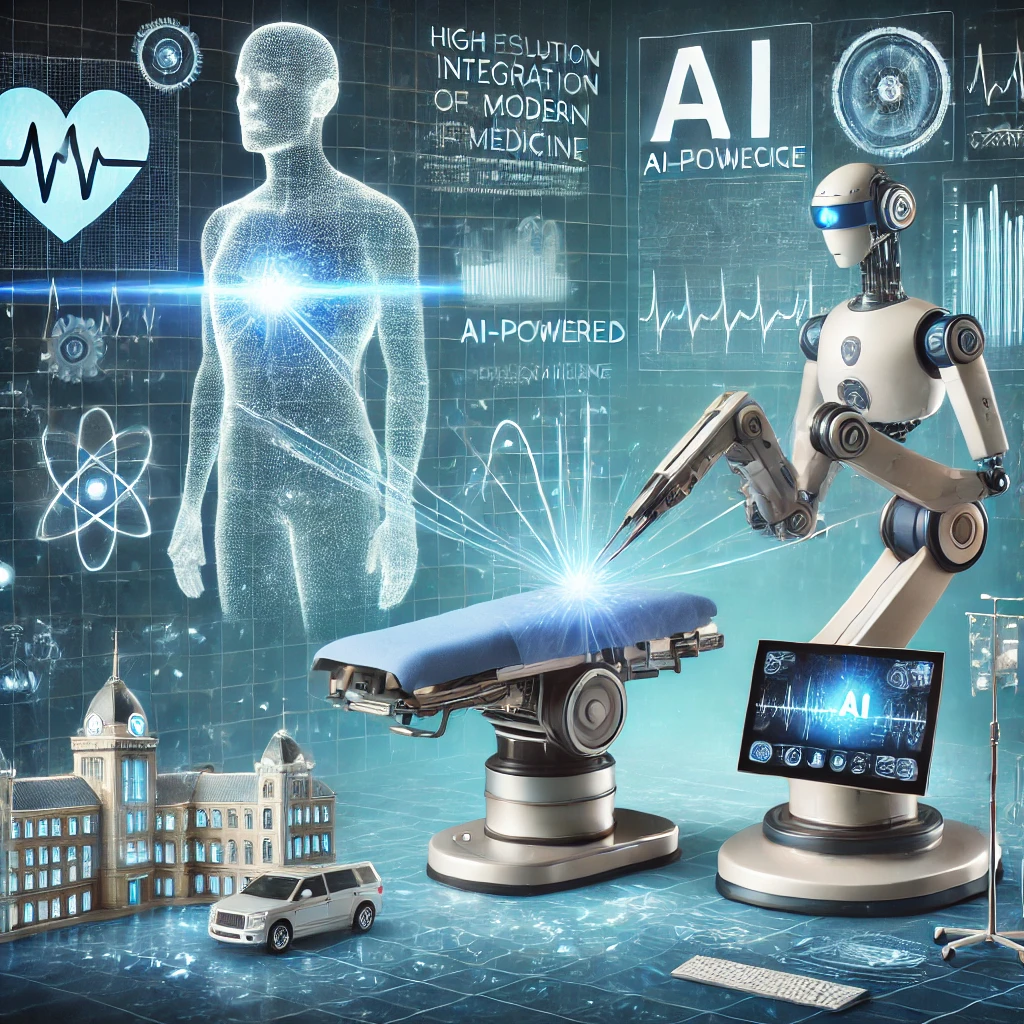
📌 Introduction: AI as the Future of Medicine
Artificial intelligence is redefining healthcare by enabling faster diagnoses, more efficient treatments, and personalized medicine. From robot-assisted surgeries to AI-powered drug discovery, the impact of AI in healthcare is unparalleled.
But can AI truly replace human doctors, or should it be seen as a collaborative tool in medicine? Let’s explore how AI is enhancing patient outcomes, improving efficiency, and revolutionizing modern healthcare.
1️⃣ AI in Medical Imaging & Diagnostics
Medical imaging is one of the most AI-driven fields in healthcare, with AI algorithms outperforming humans in detecting diseases from scans.
🔹 How AI Enhances Medical Diagnostics
✅ AI-Powered Radiology – AI scans X-rays, MRIs, and CT scans faster and with higher accuracy.
✅ Cancer Detection – AI helps identify early-stage cancer that human radiologists might miss.
✅ Automated Pathology Reports – AI processes biopsy samples and detects abnormalities faster than traditional methods.
🔍 Example:
- Google’s AI-powered DeepMind Health can detect over 50 eye diseases from retinal scans with 94% accuracy.
2️⃣ AI in Personalized Medicine & Drug Discovery
AI is speeding up drug development by analyzing millions of data points to find new treatments faster than ever before.
🔹 AI’s Role in Precision Medicine
✔ Personalized Treatment Plans – AI analyzes patient genetics to recommend the most effective treatments.
✔ AI-Driven Drug Discovery – AI identifies new drug compounds, cutting research time from years to months.
✔ Predicting Drug Interactions – AI models help minimize side effects by analyzing drug combinations.
🔍 Example:
- IBM Watson AI helps oncologists find personalized cancer treatments based on genetic data.
- BenevolentAI uses machine learning to discover new drugs for rare diseases.
3️⃣ AI-Powered Virtual Health Assistants & Chatbots
AI chatbots and virtual health assistants are improving patient engagement and healthcare accessibility.
🔹 Benefits of AI-Driven Virtual Assistants
✅ 24/7 Patient Support – AI chatbots provide instant medical advice and symptom analysis.
✅ Remote Patient Monitoring – AI tracks patient health metrics and sends alerts to doctors.
✅ AI-Powered Mental Health Support – Chatbots assist with therapy sessions and mood tracking.
🔍 Example:
- Babylon Health’s AI chatbot helps patients self-diagnose minor conditions before seeing a doctor.
- Replika AI provides mental health support and emotional companionship through AI-driven conversations.
4️⃣ AI in Robotic Surgery & Smart Hospitals
AI-driven robotic systems are assisting doctors in performing minimally invasive surgeries with higher precision.
🔹 How AI is Enhancing Surgical Procedures
✔ AI-Assisted Robotic Surgeries – AI-powered robots improve precision and reduce recovery time.
✔ Smart ICU Monitoring – AI detects critical patient conditions before they worsen.
✔ AI-Enabled Smart Hospitals – AI optimizes hospital workflows, reducing patient wait times.
🔍 Example:
- The Da Vinci Surgical System uses AI-guided robotics for complex minimally invasive surgeries.
- AI-powered ICU monitoring systems predict sepsis and critical conditions in real-time.
5️⃣ AI in Pandemic & Infectious Disease Control
AI plays a crucial role in predicting, preventing, and responding to global health crises.
🔹 AI’s Role in Public Health
✅ Predicting Disease Outbreaks – AI analyzes global health data to identify pandemic risks.
✅ AI-Powered Vaccine Development – AI accelerates the development of new vaccines.
✅ AI in Contact Tracing & Containment – AI tracks disease spread and suggests containment strategies.
🔍 Example:
- BlueDot AI predicted the COVID-19 outbreak before WHO issued its official warning.
- AI-assisted vaccine research helped develop COVID-19 vaccines in record time.
🔮 Future of AI in Healthcare: What’s Next?
The future of AI in medicine is promising, with smarter AI-powered healthcare solutions on the horizon.
🚀 What to Expect in the Future?
✅ AI-Powered Wearable Health Devices – Smartwatches will detect heart attacks before they happen.
✅ AI-Driven Virtual Doctors – AI assistants will provide real-time medical consultations.
✅ AI in Precision Mental Health – AI will analyze brain activity to improve mental health treatments.
✅ AI-Integrated Global Health Monitoring – AI will track emerging diseases in real time to prevent future pandemics.
🔍 Example:
- Apple’s AI-powered ECG feature detects irregular heartbeats and alerts users to potential heart conditions.
🎯 Final Thoughts: AI is Reshaping Healthcare
AI-powered healthcare is already saving lives, improving diagnoses, and revolutionizing patient care. But while AI is a powerful tool, it should be seen as a complement to human doctors, not a replacement.
💬 What’s your take on AI in healthcare? Would you trust AI-driven medical diagnoses? Let’s discuss in the comments! 🏥
🩺 Take the Quiz: How Much Do You Know About AI in Healthcare?
📌 Test your knowledge on AI’s role in modern medicine!
[Start Quiz Now]
I am constantly impressed by the depth and detail in your posts You have a gift for making complex topics easily understandable